Finding the right sound bath provider for your next session
Choosing a provider for sound bath in North London means understanding what transforms a session from pleasant to genuinely transformative. The right setting, skilled facilitation and thoughtful design all play a role in the depth of your experience.
What makes a sound bath experience worth attending
A sound bath is more than ambient music playing in a room. The quality of your experience hinges on several interconnected factors: the physical environment, the instruments used, the facilitator’s knowledge, and how different modalities work together.
The role of setting and space
Where you spend 2 hours matters enormously. A calm, professionally held space allows you to relax your nervous system rather than maintain vigilance. The room itself becomes part of the healing. When a provider takes care to create an environment suited to group work—one where you can settle without distraction—you’re more able to receive the benefits of sound and energy work.
This is why location and atmosphere are among your first screening criteria. A well-chosen venue demonstrates that the provider understands how environment shapes experience.
How sound instruments shape the healing journey
Not all sound baths use the same instruments, and this matters. Gongs, Tibetan bowls, Koshi chimes and tuning forks each carry different frequencies and qualities. A provider who layers these thoughtfully—building from grounding tones to opening frequencies to deeper stillness—creates a journey rather than a static soundscape.
The instruments should feel intentional, not random. Ask what instruments are used and how the practitioner selects them for each session.
Why practitioner expertise matters
A skilled facilitator holds space with care. They understand how breathwork prepares the body, how sound penetrates different layers of awareness, and how to close a session so participants feel grounded rather than unmoored. Experience matters, particularly if the provider integrates multiple modalities—such as crystal reiki, shamanic healing or energy work—alongside the sound bath itself.
Key elements to evaluate in a sound bath provider in North London
When researching providers, look beyond surface appeal. Several structural elements reveal whether someone has thought carefully about how to deliver real benefit.
Session structure and pacing
A well-designed ceremony follows a coherent arc. It might begin with breathwork to settle and open the body, move into a shared ritual element (such as cacao ceremony), then flow into the main sound journey, and close with individual attention and integration work. This sequencing matters because each layer builds on the last, allowing you to go deeper than any single element could achieve alone.
Ask how long the session runs and what each segment includes. A 2 hours ceremony that moves unhurried through multiple phases suggests more thoughtful design than a rushed 1 hour option.
Range of healing modalities offered
Some providers work with sound alone. Others blend sound with breathwork, energy healing, crystal work or shamanic practices. Neither approach is inherently better, but clarity matters for you. If you’re drawn to a more integrated experience—one where sound, breath, ritual and healing energy work together—seek a provider who explicitly offers this.
Check whether they use sacred geometry grids, crystal reiki, or other modalities alongside the sound. These details tell you whether you’re getting a focused sound experience or a more holistic evening.
Group size and intimacy
Larger groups can create powerful collective energy. Smaller groups allow for more individual attention. Many participants find that the shared energy of a group adds something they couldn’t access alone. But if you prefer more personalised attention during the session, ask about typical group sizes and whether individual sound healing moments are included. See what sound bath in West Hampstead involves. See what a gong and Tibetan bowl sound bath involves.
Understanding what happens during a session
When you arrive for a sound bath in North London, knowing the basic flow helps you settle in without wondering what comes next.
Opening and grounding practices
Most sessions begin with guided breathwork designed to quiet the mind and open the body. This isn’t decoration—it’s preparation. Conscious breathing shifts your nervous system, making you more receptive to the frequencies and healing work that follow. A good opening also helps the group settle into shared presence.
After breathwork, some sessions include a ritual element such as ceremonial cacao, prepared with intention. This marks a transition from ordinary time into sacred space.
The sound journey itself
Once grounded, the sound bath begins. Instruments wash over the group in layers—the deep resonance of a gong, the crystalline tones of Tibetan bowls, the delicate shimmer of tuning forks. The sound is not background; it’s the main event. Many people report shifts in breathing, emotion or body sensation as the frequencies work through them.
During this phase, some practitioners add additional modalities—crystal reiki using sacred geometry grids, or shamanic energy work—woven throughout the sound journey. The effect is cumulative rather than scattered.
Integration and closing
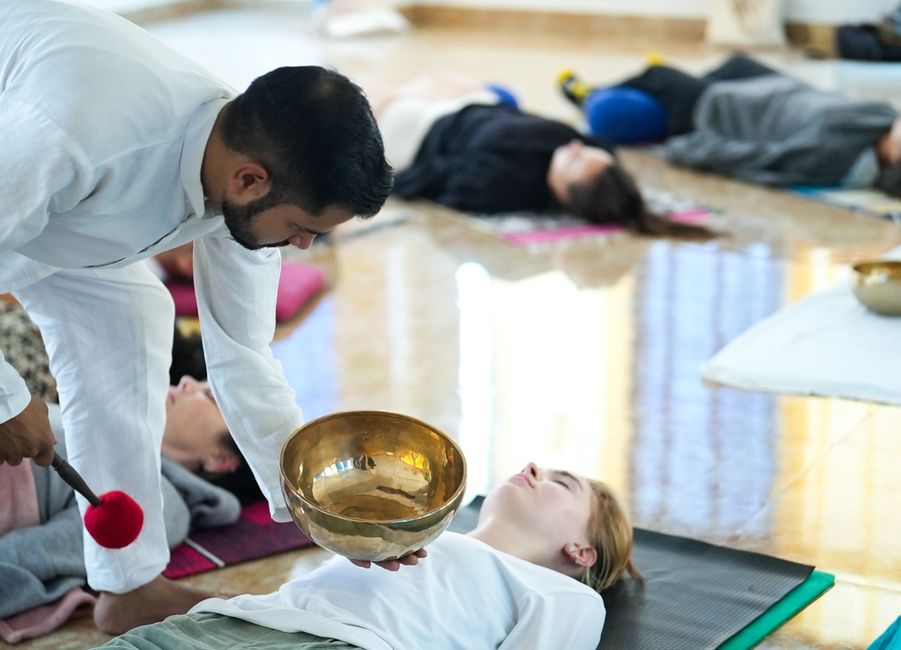
A thoughtfully designed session doesn’t end abruptly. After the main sound journey, individual attention might follow—a personal moment with Tibetan bowl or tuning forks focused on you. Then comes a closing energy healing segment that brings focus back inward and prepares you to return to ordinary awareness.
The pace throughout is unhurried. There’s room to simply be present with whatever arises, without pressure to achieve anything or feel a particular way.
Questions to ask before booking
- How long does the full session run, and what does each segment include?
- What instruments are used, and how does the facilitator choose them?
- What additional modalities (breathwork, energy healing, ritual) are part of the experience?
- How large are typical groups, and is individual attention included?
- What can I expect to feel or experience during and after the session?
- Is this suitable if I’m new to sound healing or energy work?
- What should I bring, and are there any contraindications I should know about?
Finding the right fit for your needs
The best sound bath provider in North London for you depends on what you’re seeking. If you’re new to ceremony work and curious about sound therapy, look for someone who welcomes beginners and explains each element clearly. If you already have experience with energy healing, you might seek a more advanced or specialised offering.
Consider whether you want a focused sound experience or a fuller evening that weaves in breathwork, ritual and crystal work. Think about whether you prefer smaller, intimate groups or larger collective sessions. Notice which practitioners emphasise the calm, professional quality of their space—this signals they understand how environment shapes healing.
Many people find that no two ceremonies feel quite the same, even with the same provider. The combination of your own state, the group’s collective energy, and what the facilitator offers on the day all converge. This means your first session is exploratory; give yourself permission to try, notice what lands, and return to a provider who resonates with you.
When you’re ready to explore a sound bath in North London, look for a provider whose approach, space and modalities align with what you’re seeking. The right match can deepen your healing practice in ways you might not expect.